
As entrepreneurs, we often focus on the nuts and bolts of our businesses, but we sometimes neglect a crucial aspect: telling our entrepreneur story.
Whether you operate a social enterprise, B2B SaaS company, or a professional service business, your story is influential and can inspire others.
A compelling narrative can set you apart, connect you with your audience, and drive your business forward.
However, many entrepreneurs struggle with this.
Over the past decade, I have conducted branding and content workshops for hundreds of business owners and collaborated closely with a small group of entrepreneurs to develop their narratives. I’ve also written a lot of their content.
Here are some tips for telling better stories.
Table of Contents
The Importance of an Entrepreneur Story
Telling your entrepreneur story effectively is not just about sharing your achievements; it’s about creating a connection with your audience. Your story should reflect your journey, your challenges, and the passion that drives you.
When your audience can relate to your experiences, they are more likely to trust and support your business.
Related: Strategies for prioritizing sales in small businesses
Here are five common mental barriers that might be holding you back from telling your entrepreneur story:
1. Impostor Syndrome
Feeling like your achievements aren’t worthy enough to share can prevent you from telling your story confidently.
2. Fear of Judgment
Worrying about how others will perceive your story can be a major deterrent.
3. Perfectionism
Waiting for the “perfect” time or the “perfect” story can result in never sharing anything at all.
4. Underestimating Your Impact
Believing that your story doesn’t matter or won’t make a difference can keep you silent.
5. Lack of Clarity
Not being clear on what your story is or how to articulate it can make storytelling feel overwhelming.
Recognizing these barriers and taking steps to overcome them is crucial. Working with an experienced guide or copywriter is a good way to go.
Whether you operate a social enterprise, B2B SaaS company, or a professional service business, your story is influential and can inspire others.
Don’t let mental hurdles keep you from sharing it with the world.
Five Types of Stories You Can Tell
To effectively engage your audience and showcase different facets of your business, consider telling various types of stories. Here are five impactful story types:
1. The Origin Story
Share how and why you started your business. This narrative highlights your motivations, challenges, and the initial steps you took, providing a personal touch that can deeply resonate with your audience.
Here’s a fantastic example of fin-tech entrepreneur Kane Jackson sharing why he started his business, Maslow.
2. Customer Success Stories
Showcase how your products or services have positively impacted your customers. These stories not only build credibility but also demonstrate real-life applications and benefits of your offerings.
Here’s a great example of a customer success story shared on Linkedin by James Michael of BeenSortd.
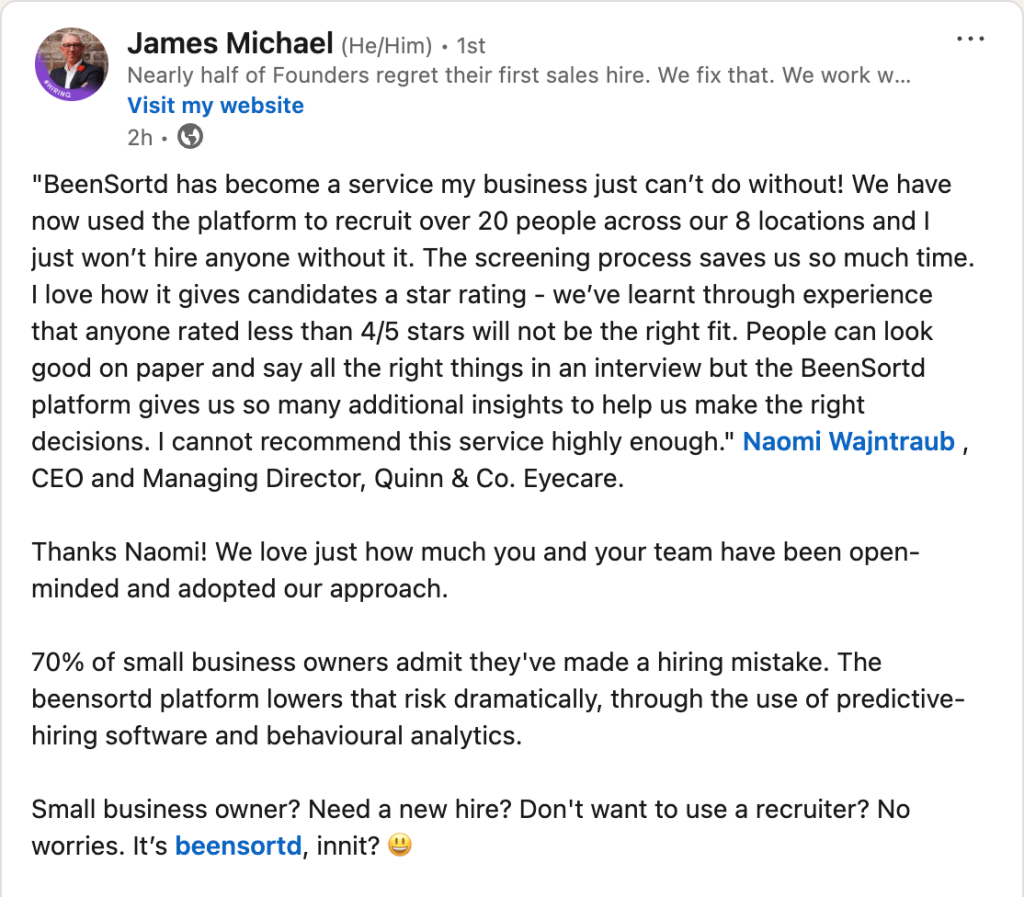
What made this testimonial even more powerful was when BeenSortd client Naomi Wajntraud (who was tagged in James’ LinkedIn post) responded in the comments to add more context.
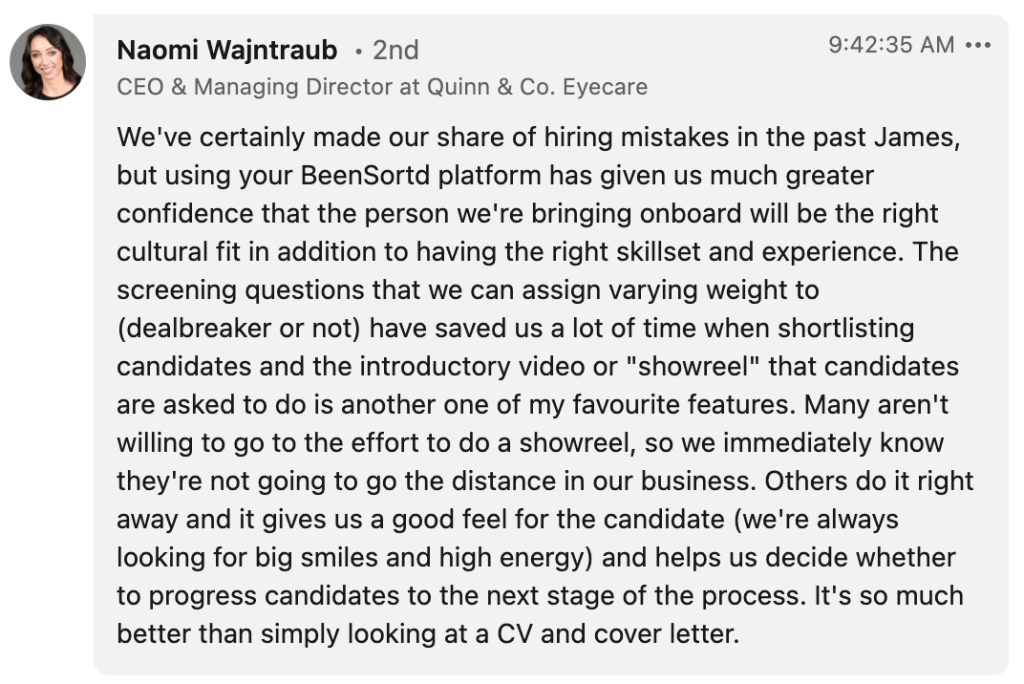
You just can’t make up this kind of compelling storytelling! (sorry, AI, nothing beats an authentic story told by a happy customer)
New to creating compelling case studies? Check out this ultimate guide to crafting case studies that convert.
3. Entrepreneur Journey and Stage of Business Growth
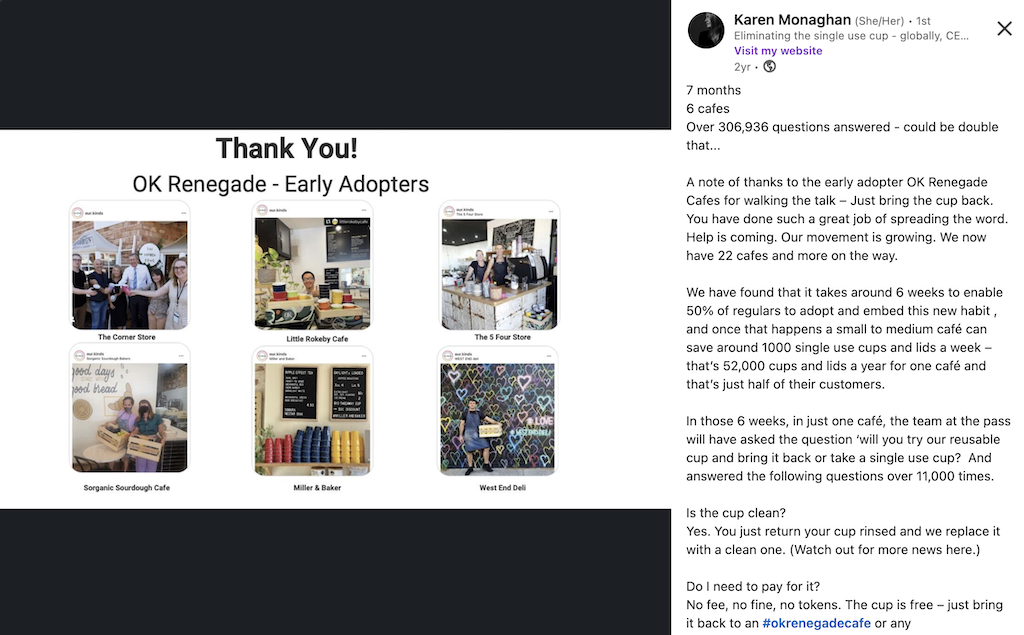
Detail your journey as an entrepreneur and the different stages of your business growth. Discuss the milestones, setbacks, and lessons learned along the way. This type of story offers valuable insights and inspiration for others in similar stages of their business journey.
Here’s an example from Karen Monaghan, CEO of climate-tech startup Our Kinds:
4. Behind-the-Scenes
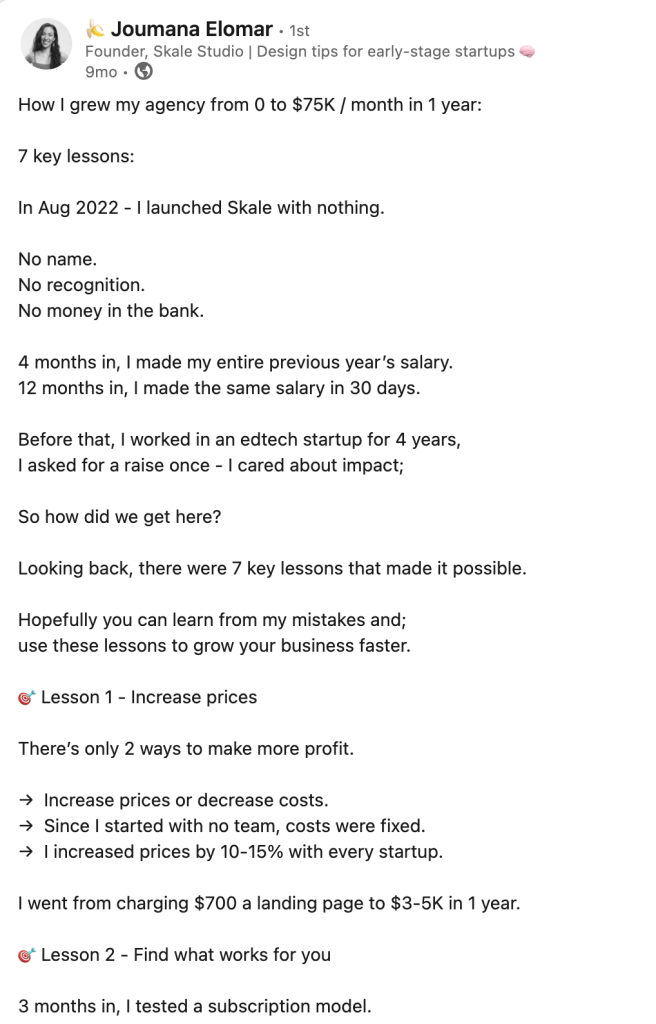
Give your audience a glimpse into the daily operations of your business. Whether it’s your team dynamics, your work culture, or the process of creating your products, behind-the-scenes stories humanize your brand and foster a stronger connection with your audience.
Here’s a great example of a behind-the-scenes story shared by Joumana Elomar on Linkedin:
5. Vision and Future Goals
Share your long-term vision and the future goals of your business. This type of story not only motivates your team but also engages your audience by inviting them to be a part of your journey moving forward.
By incorporating these types of stories into your content strategy, you can create a rich tapestry of narratives that engage, inspire, and build a loyal following for your brand.
How to Craft a Compelling Entrepreneur Story
Here’s how you can start crafting your entrepreneur story:
Identify Your Core Message
Think about what drives you and why you started your business. What is the core message you want to convey to your audience?
Highlight Your Challenges and Triumphs
Don’t just focus on your successes. Share the challenges you’ve faced and how you overcame them. This makes your story relatable and authentic.
Be Authentic and Vulnerable
Authenticity is key to connecting with your audience. Don’t be afraid to show your vulnerabilities. It makes you human and approachable.
Keep It Simple
Your story doesn’t have to be complicated. Keep it simple and focused on the main points that define your journey.
Share Your Vision
Let your audience know where you see your business going. Sharing your vision can inspire others to join you on your journey.
Practical Steps for Business Owners and Marketing Leaders
Creating a framework that prioritizes starting with your customer’s problems is essential for producing impactful content. Here’s a step-by-step guide:
1. Understand Your Audience
Know who your customers are, their pain points, and what they are looking for. This understanding is the foundation of your content.
2. Identify Key Problems
Focus on the primary problems your audience faces. These will be the central themes of your content.
3. Create Solutions
Develop content that offers solutions to these problems. This positions your business as a helpful and knowledgeable resource.
4. Use Real Stories
Incorporate real stories from your customers or your own entrepreneur journey to make the content relatable and engaging.
5. Consistent Messaging
Ensure your messaging is consistent across all platforms. This reinforces your brand and helps build trust with your audience.
6. Measure and Adjust
Regularly measure the impact of your content and be ready to adjust your strategy based on the feedback and results you get.
Final thoughts on telling your entrepreneur story
By recognizing the mental barriers that hold you back and implementing a customer-focused content framework, you can craft a compelling entrepreneur story that resonates with your audience and drives your business forward.
Embrace your journey, share your challenges, and connect with your audience on a deeper level. This approach will not only help you attract leads but also build a loyal customer base.
Featured image created by ChatGPT/Dall-E.