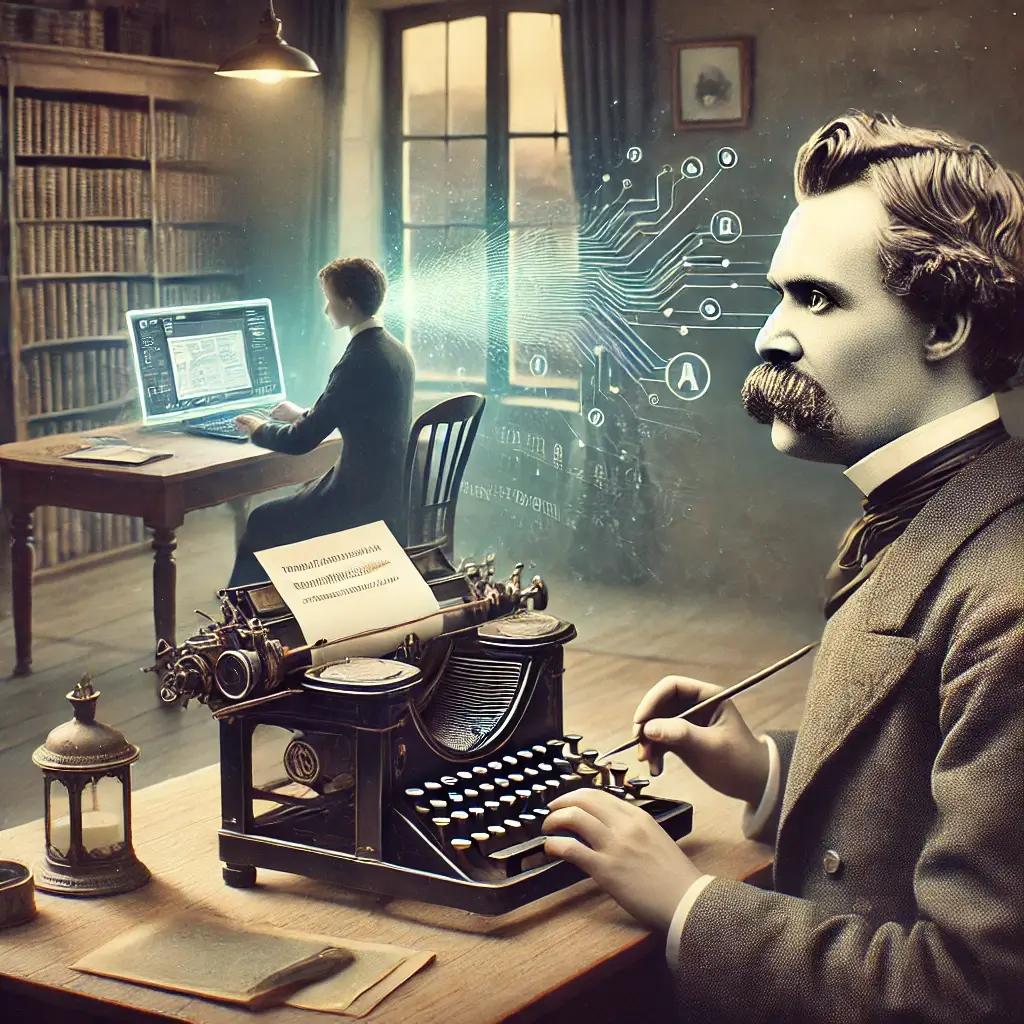
In 1882, Friedrich Nietzsche got his hands on a Malling-Hansen writing ball, a fancy typewriter of its time, because his eyesight was failing. He quickly realised it was changing more than just how he wrote.
His style shifted “from arguments to aphorisms, from thoughts to puns, from rhetoric to telegram style.” He called it “a pure, blind, and intransitive act” like he was just punching keys, disconnected from the flow of his own thoughts.
His bigger concern? That tools like this weren’t just helping humans, they were shaping how we think. He wrote:
“Writing is no longer a natural extension of humans who bring forth their voice, soul, individuality through their handwriting. On the contrary, humans change their position – they turn from the agency of writing to become an inscription surface.”
Now, fast forward to today. AI is everywhere. And yes, I use it all the time. ChatGPT and Claude for brainstorming and drafting, Perplexity for research. It’s helping me plan trips, cook healthier meals, generate visuals, and refine business ideas.
But Nietzsche’s words make me pause. If a typewriter could change the way he thought and wrote, what happens when AI starts drafting everything for us? Are we still in control of our ideas, or are we becoming the “inscription surfaces” he warned about?
Are we shaping AI, or is AI shaping us?